Lockout Service Coverage
Lockout service coverage pays for someone to come help you when you're locked out of your car or stranded with a dead battery, flat tire, or empty tank.
What it pays for
Covers
- Getting locked out A locksmith or service truck comes to unlock your car if your keys are inside or you've lost them.
- A dead battery Someone comes to jump-start your car on the spot.
- A flat tire A technician swaps on your spare tire where you're parked.
- Running out of fuel Someone brings enough fuel to get you to a station.
- Getting stuck If your car is stuck in mud, snow, or a ditch just off the road, a tow truck can winch it out.
- A tow to a shop If the car won't start or isn't safe to drive, it gets towed to a nearby repair shop or your home.
Doesn't cover
- A new set of keys The service gets you back into the car, but cutting a replacement key or reprogramming a fob is on you.
- Repair costs The visit gets the car running or moving again, but any part that's actually broken, like a dead battery itself, isn't replaced under this coverage.
- Tire replacement The flat gets swapped for your spare, but a new tire or a repair isn't included.
- Long-distance towing Coverage usually pays for a tow to the nearest shop, not wherever you'd prefer the car to go.
- Lockouts at home This covers your car, not your house, so a locksmith for your front door isn't part of it.
For most older drivers, this is worth keeping
The cost of this coverage is small next to what a single tow or lockout costs if you have to pay for it yourself, and that math doesn't really change with age. What changes is how much you want to be standing in a parking lot at dusk trying to sort out a tow company you've never used.
If you still drive regularly, especially longer trips to see family or on rural roads, the odds you'll need this at some point go up. A car that's older or has higher mileage is also more likely to leave you stranded with a dead battery or a flat than a newer one.
If you barely drive anymore, keep the car in a garage, and rarely go far from home, the case for this coverage is weaker. You're less likely to need it, and if you do, a neighbor or family member might solve it faster than waiting on a service call anyway.
Some drivers already have this kind of help through another membership or program unrelated to their car insurance. If that's you, paying for it twice doesn't make sense, and dropping it from the policy is a reasonable move.

How it actually works when you use it
You call the number on your insurance card or use the insurer's app, tell them where you are and what's wrong, and they send someone out, usually a local towing or roadside company they contract with. There typically isn't a deductible on this coverage the way there is with collision or comprehensive, since the dollar amounts involved are small.
Have your policy number, your location, and a description of the problem ready when you call. If you're on a highway shoulder or somewhere unsafe, stay inside the car with your seatbelt on and hazards flashing until help arrives.
The technician handles the immediate problem on the spot, a jump, a tire swap, an unlock, and that's the end of it unless something bigger is wrong. If the car needs real repair, the tow gets it to a shop, but you're responsible for the repair bill itself.
Most policies limit how many times you can use this in a given period, so if your car is having repeated problems, it's worth getting it looked at rather than relying on tow calls as a fix.
Often confused with towing coverage
Lockout service coverage
This covers the roadside moment itself, getting you unlocked, jumped, or your tire swapped, right where you are. It's meant for small, common problems that leave you stuck but not necessarily broken down.
Towing and labor coverage
This is the broader version that includes towing as its main purpose, often bundled with the same roadside services. Some policies combine both under one name, while others sell them as separate add-ons with separate limits.
Check your own policy's wording before assuming you have one but not the other, since insurers label this differently.
Real situations
You come out of church on a Sunday and your car won't start. It's just the battery.
This pays. A jump-start at your location is exactly what this coverage is for.
You hit a patch of ice on a back road and slide into a ditch, with no other car involved.
This pays for the tow out of the ditch, but any dents or damage to the car itself falls under collision coverage, not this one.
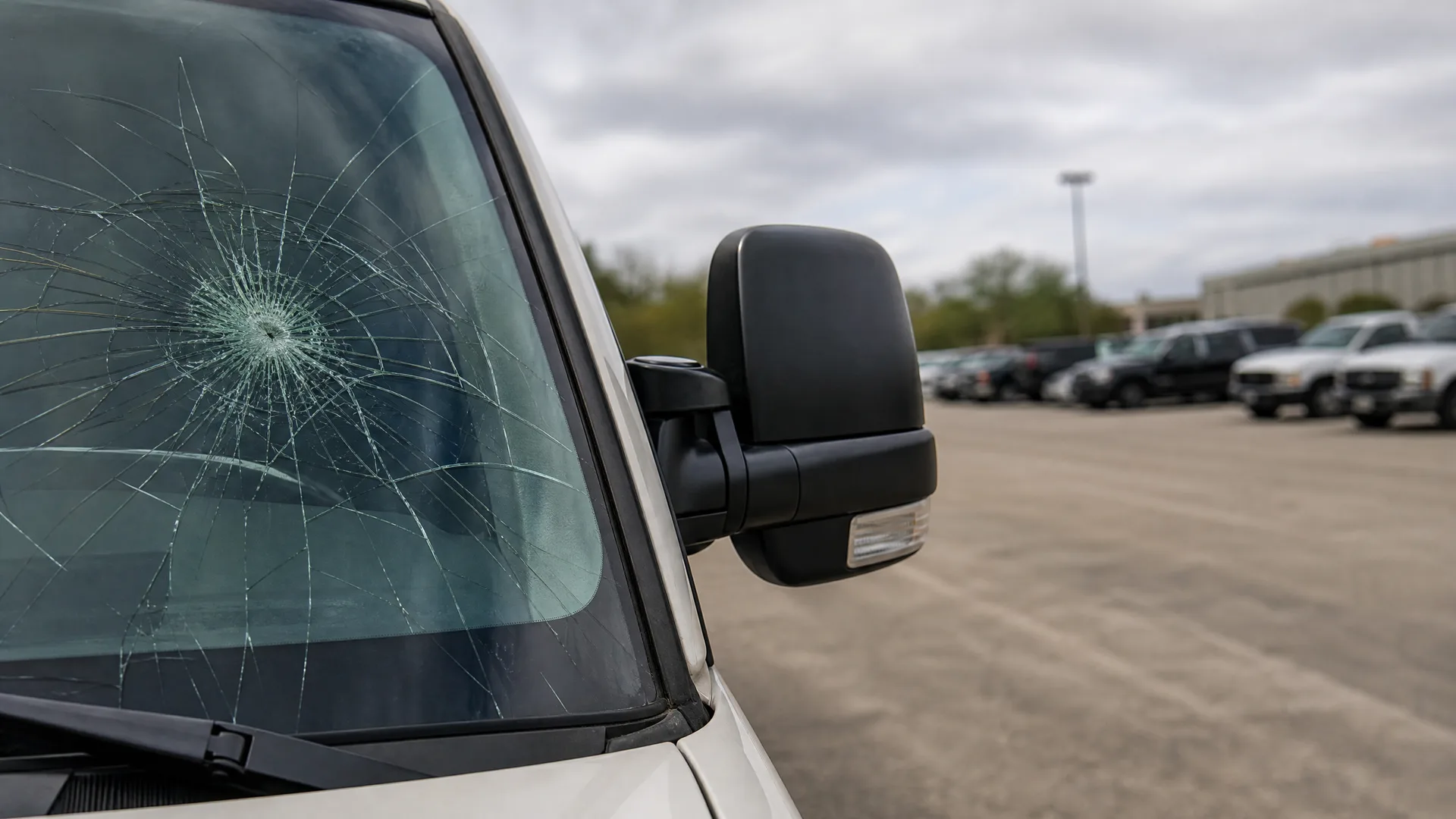
Your car gets hail damage while parked in a shopping center lot.
This doesn't pay. Hail damage is a comprehensive claim, not a roadside service call.
Once you know whether you want lockout service coverage on your policy, you can compare quotes with that decision already settled.
Questions people ask about this
Does lockout service coverage cost extra?
It's usually a small add-on rather than something automatically included. Check your declarations page to see if it's already listed as a separate line, since some policies bundle it in with other roadside services by default.
What happens if I use lockout service too many times?
Most policies cap how many calls you can make in a given period, and going over that limit means you pay out of pocket for the next one. If you're using it often, it's worth asking your insurer directly what your specific limit is, since it varies by policy.
Can I use lockout service in a car I don't own?
Often yes, since this coverage frequently follows the driver rather than the vehicle, but this varies by policy and state. Check your own policy documents or ask your agent directly before assuming it applies.
Does lockout service coverage affect my rates if I use it?
Generally no, since it's a small, flat-fee kind of service rather than a claim against your driving record. That said, some insurers do track frequent use, so it's reasonable to ask how your specific company handles it. Â
Who actually shows up when I call for lockout service?
It's typically a local towing or roadside assistance company that contracts with your insurer, not an employee of the insurance company itself. The dispatcher on the phone coordinates it, but the person who arrives works for a separate local business.