Roadside Assistance When Driving Alone
Roadside assistance is an add-on to your policy that pays for help when your car breaks down, won't start, or gets stuck, so you aren't stranded alone.
What roadside assistance pays for
Covers
- Towing to a shop If the car won't run, it gets towed to a repair shop or dealer near where you broke down.
- Jump start A dead battery gets a jump on the spot so you can get moving again.
- Flat tire change Someone comes out and swaps in your spare if you have one and the car can be driven on it.
- Lockout help If you're locked out or lost your keys, someone comes to get you back into the car.
- Fuel delivery If you run out of gas, enough fuel gets brought to you to reach the nearest station.
- Winching or extraction If the car is stuck in mud, snow, or a ditch, it gets pulled back onto the road.
Doesn't cover
- The repair itself Roadside assistance gets the car to a shop and off the road. The actual repair bill is yours or your mechanic's to sort out.
- A new battery or tire The jump or the tire change is covered, but the part you need replaced is not. You still have to buy it.
- A rental car while you wait That falls under a separate coverage for transportation while your car is being fixed, if you carry it.
- Damage from the breakdown If being stuck caused damage, like overheating from a flat that was driven on too long, that's handled as a separate claim, not this one.
- Unlimited tows in a short window Most plans cap how often you can call for help before the coverage expects you to address the underlying problem with the car.
For most older drivers, this coverage is worth keeping
The case for it has less to do with the car and more to do with what you want to avoid. Standing on the shoulder of a road waiting for a stranger to stop, or walking to find help, is a different kind of risk at this age than it was decades ago. This coverage exists mainly to take that scenario off the table.
It matters less how much the car is worth and more how often you're driving alone, especially on rural roads or at times when traffic is thin. If most of your driving is short trips near home where help is five minutes away either way, the coverage does less for you. If you drive longer distances alone, visit family out of town, or live somewhere towing is expensive to arrange on your own, it earns its keep.
Some of this is already paid for elsewhere. Certain vehicles come with a manufacturer roadside plan for the first several years of ownership, and some credit cards or membership organizations include towing benefits. If you already have one of those, adding this on your policy may be paying twice for the same thing.
The honest reason to drop it is if you have one of those other plans and rarely drive far from home. The honest reason to keep it is almost everything else, because the cost is usually low and the alternative is figuring out towing on your own, from the side of a road, while upset.
What happens when you actually call for help
There's usually no deductible on this coverage, since it's a flat benefit rather than a claim against damage. You call a number, tell them where you are and what's wrong, and someone is dispatched to you. Have your location, your policy information, and a description of the problem ready, since that's most of what they'll ask for.
The tow or service itself is handled by a contracted provider, not the insurance company directly, so wait times depend on where you are and what else is happening that day. In a remote area or during bad weather, expect it to take longer than it would in town.
What you get is the service itself, the tow, the jump, the tire change. What you don't get is reimbursement if you paid a tow truck out of pocket before calling, so call first if you can, rather than handling it yourself and expecting to be paid back.
Keep the coverage details somewhere you can find them without digging, like a glove compartment card or a saved number in your phone, since the point of this coverage is being able to use it quickly when you're rattled.
Roadside assistance versus rental reimbursement
Roadside Assistance
This pays for getting your car off the road and to a shop when it breaks down, gets stuck, or you're locked out. It's about the moment of the breakdown itself.
Rental Reimbursement
This pays for a rental car while your own car is in the shop after a covered claim. It picks up after the tow, covering the days or weeks you're without a car.
If you only have one car and can't easily go without it for a few days, rental reimbursement matters as much as roadside assistance does.
Real situations
You're driving back from a doctor's appointment and the car just stops accelerating on a two lane road outside town.
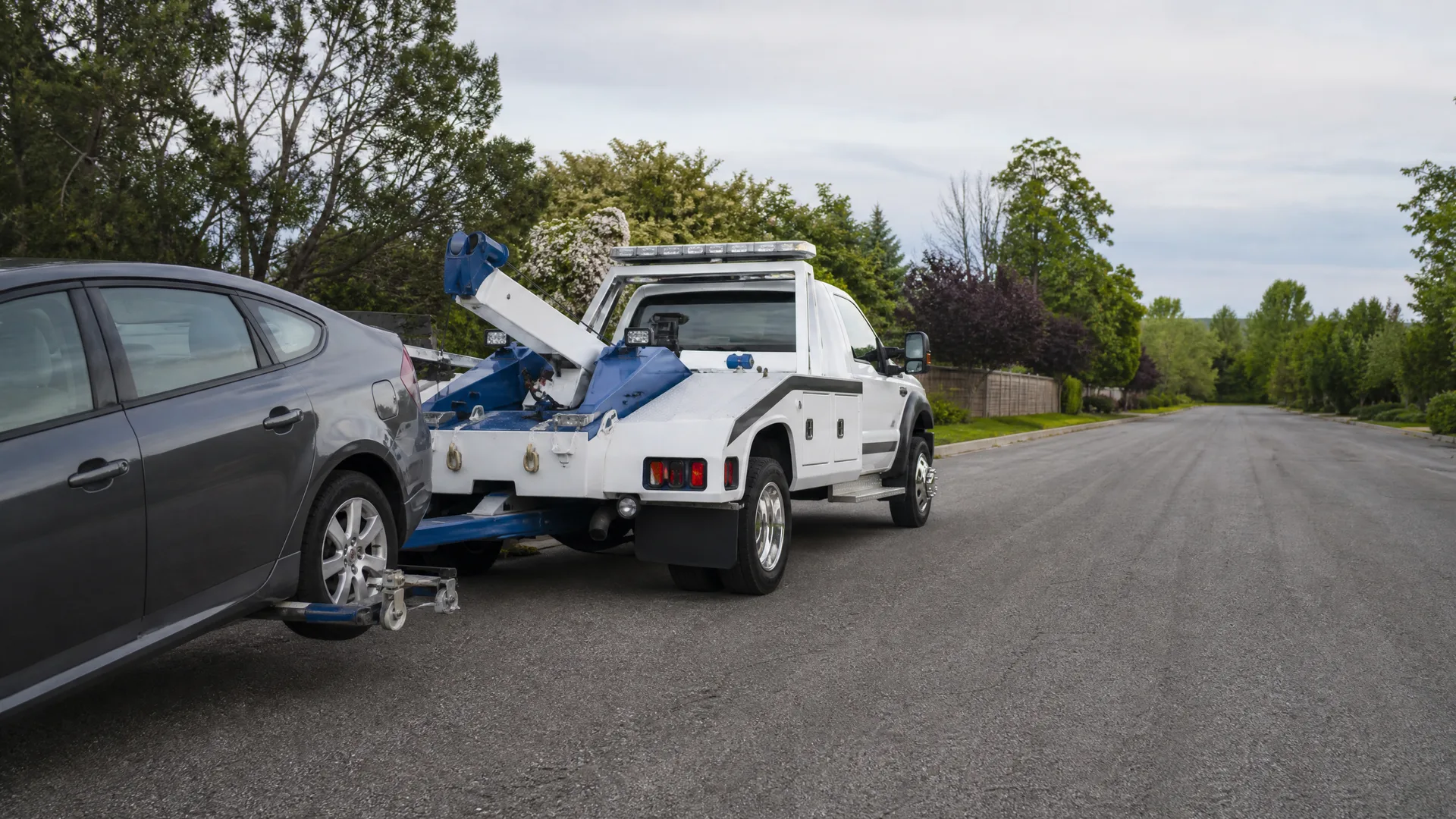
Roadside assistance pays for the tow to a shop, since this is exactly the breakdown situation it covers.
You come out of church after a hailstorm and find the hood and roof dented.
This is hail damage to the car itself, handled under comprehensive coverage, not roadside assistance.
You stop for gas on a long drive and realize your key fob battery died and the car won't start.
Roadside assistance covers this, since lockout and no-start situations are part of what it's for.
Now that you know whether roadside assistance makes sense for how and where you drive, you can compare quotes with that already decided.
Questions people ask about this
Does roadside assistance cover me if someone else is driving my car?
Usually yes, because the coverage is attached to the vehicle rather than to you personally. Check your policy to confirm, since a few plans tie the benefit to a specific listed driver instead.
Can I use roadside assistance in a car I don't own?
Often yes, if the coverage is written to follow you as a driver rather than just the vehicle, but this varies by policy. Look at your declarations page or ask your agent which way yours is set up.
What do I do if my car breaks down and I don't have roadside assistance?
You call a towing company directly and pay out of pocket, then look into whether any other coverage you have reimburses part of it. This is also the moment many people decide to add the coverage going forward.
Does roadside assistance affect my rates if I use it often?
It can, since frequent use may prompt a review at renewal, though a single use rarely does. This varies by insurer and state, so ask directly if you're a frequent user of the benefit.
Is roadside assistance required by law?
No, this is an optional coverage you add, not something required to legally drive. Whether it's even offered as an option varies by state and by insurer, so check your policy to see if you already have it.